This website uses cookies to store information on your computer. Some of these cookies are used for visitor analysis, others are essential to making our site function properly and improve the user experience. By using this site, you consent to the placement of these cookies. Click Accept to consent and dismiss this message or Deny to leave this website. Read our Privacy Statement for more.
EDRA55 PORTLAND |HUMAN CENTRIC ENVIRONMENTS: Promoting Design that Sustains Human Prosperity, Well-being, and the Global Environment at All Scales
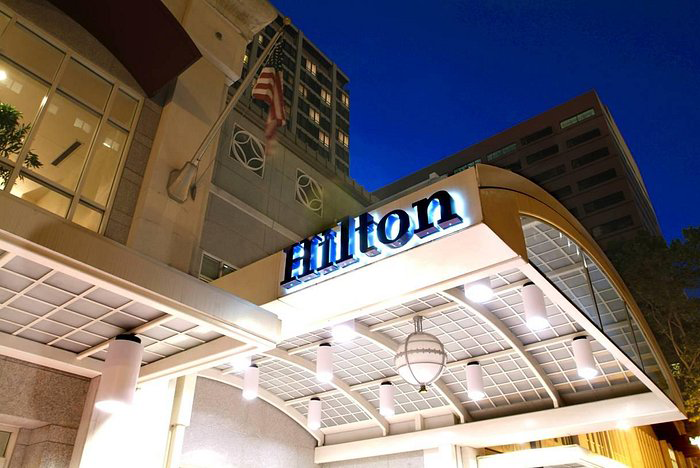
HILTON DOWNTOWN PORTLAND - JUNE 19-22, 2024
The Environmental Design Research Association (EDRA) invites practitioners, researchers, and educators to submit their proposals for EDRA’s 55th annual conference. The event is hosted by the University of Oregon in Portland, Oregon, and will center on promoting human-centric design that considers people’s prosperity, satisfaction, and well-being while celebrating sustainability, resilience, and diversity in the built and natural environment at all scales.
EDRA55PDX will be a progressive setting to question and explore human-centric environments and design in six conference tracks and scales. We will frame our discussions in all of the conference tracks of our design, research, and
policy projects by asking key questions:
How can the design of the built and natural environments be analyzed and evaluated from a human-centric perspective?
How can we think of the multiple subthemes and tracks from a premise of putting the human at the center of our design and research projects?
What is the role of human-centric design and research in the age of AI?
What does it mean to occupy environments that are both human-made and human-centric?
How can teaching future generations of designers flourish with transdisciplinary collaborations that celebrate human-centric design pedagogies?
#EDRA55PDX invites you to download our call for proposals, and submit your work on our submission
portal. The EDRA55 conference committee can assist you with questions about your submission. Just email conference@edra.org.
This track will examine how we generate knowledge to address the great challenges of urban ecological settings in cities. Examples of topics include the uses of public and semi-public spaces, sustainable urbanism, adaptation
to climate change, cultural landscapes, preservation of tangible and intangible heritage, waste, and pollution management (soil, air, noise, water), natural resource depletion, loss of biodiversity, loss of cultural
diversity, and urban sprawl. How do we design human-centric environments dedicated to urban ecology and the preservation of cultural landscapes to successfully manage these challenges both locally and globally?
This track will focus on human-centric design and evaluation of sustainable building and infrastructure. How do we recognize and plan for the needs of diverse populations shaped by people’s unique perspectives, life
experiences, socio-demographics, cultural influences, identities, geography, and preferences, to name a few? What impacts did our buildings, urban centers, and indoor environments have on vulnerable populations
including children, ethnic minorities, young adults, older adults, aging in place, houselessness, people with mental health disorders, and people facing physical spatial abilities? How did our city centers and downtowns
recover from post-COVID-19 pandemic, remote workplace design? How do we design sustainable urban centers that provide healthy levels of density, livability, and affordability, especially regarding dignified housing
for all citizens? How would the design of net-zero energy, water, and waste in buildings provide a blueprint for better ecological design and sustainable neighborhoods?
This track will focus on the numerous ways planning and design professionals, researchers, and educators define resiliency and the scale of design actions to adapt and reduce the impacts of climate change on people.
How does the concept of resilient design, its approaches, methods, and tools be used to design human-centric environments? What is the theoretical foundation for research and practice focused on resilient design?
What are the emerging design tools (data, simulation, virtual) and how are they being deployed in design projects? What are the ways researchers are studying the built and natural environment in all scales to provide
sustainability and resilience in the face of climate change?
This track will focus on research and practice models to promote human-centric spaces that are designed to promote health and well-being for all people, communities, transspecies, ecosystems, and living systems. This
track will uncover and question the methods, conversations, and outcomes for the research, design, and policy debates under the umbrella of healthy human-centric environments in everyday spaces as well as healthcare
facilities.
This track focuses on celebrating environmental design work, scholarship, and advocacy at the intersections of gender, race, ethnicity, indigeneity, sexuality, and economic inequality that is enriched by and enriching
their lived experience. This track will highlight how professionals and academics are crossing boundaries to address emerging issues that compromise spatial justice, equity, and inclusion by design and engage in
critical conversations about effective approaches, new perspectives on human-centric engagement, and empowerment of marginalized and underserved communities.
This track examines the means and practices for sustaining productive collaborations and partnerships to promote human-centric design at different scales for all types of environments. What are the benefits and challenges
of transdisciplinary collaborations? What critiques emerge when blurring and/or borrowing from multiple disciplines? How can we investigate human-centric design within transspecies and transdisciplinary frameworks?
What methodologies are being embraced by environmental design researchers and practitioners to innovate and stimulate research collaborations and community engagement? What new methods, ways of working, ethics,
or insights can help advance the practice of human-centric design? What other topics and focus can we bring to the discussion of human-centric design that we have not considered? What open topics can help us re-think
and re-question our conference theme and tracks?
EDRA55 Organizing Committee
EDRA 55 LOCAL COMMITTEE
Ihab Elzeyadi, Ph.D. Professor of Architecture, University of Oregon
Philip Speranza, MArch. Associate Professor of Architecture, University of Oregon
Chandra Robinson, MArch. Principal, LEVER Architecture
EDRA PROGRAM COMMITTEE
Debarati 'Mimi' Majumdar Narayan, Ph.D.
Chair-elect. EDRA Board of Directors
Julie Stevens MLA Member of the Board
Lorraine Maxwell, Ph.D. Emeritus Member of the Board
Deni Ruggeri, Ph.D. EDRA Executive Director
EDRA55 timeline
*All dates are intended as 11:59PM Pacific Standard Time (GMT -8) unless otherwise noted.
October 16, 2023
EDRA55 Submission portal opens. Submit your work here
December 18, 2023 Extended deadline January 12, 2024
Due date for the following submissions: Intensives, Paper Abstracts, Individual Presentations, and Group Presentations.
Notification of acceptance for peer reviewed proposals expected Mid-March 2024
January 29, 2024
Due date for Visual Presentations including abstracts for Posters, Digital Media Shorts. Submit here
Notification of acceptance for Work In Progress and Practitioner/Researcher Storytelling expected Early March 2024
FEBRUARY 23, 2024
Due date for Graduate Student Mentoring Workshop submissions. Submit here
Notification of acceptance for Graduate Student Mentoring Workshop expected Early March 2024.
March 29, 2024 EXTENDED DEADLINE APRIL 8, 2024
Early Bird registration ends 11:59PM EST.
Due date for ALL conference presenters to register for the conference; a minimum of one author or co-author of each accepted individual presentation/abstract/poster session is required to be part of the
EDRA55 program. For groups sessions, all presenters should be registered. Presenters do not have to be EDRA members, however, there is a reduced registration fee for members.
Due date for revisions of Full-papers, abstracts, individual, and group submissions.and Group Presentations.
May 20, 2024
Upload Visual Presentations (digital file of Poster and Digital Medial Shorts)
June 19, 2024
Juneteenth Design Celebration (open to the public)
JUNE 19-22, 2024
EDRA55 Portland | HUMAN CENTRIC ENVIRONMENTS begins
join us for #EDRA55PDX
Thank you to our sponsors
We invite sponsors to support and make EDRA55 a success!